
Dhar Pakad
Dhar Pakad
Dhar Pakad
Raising awareness about cleanliness and sustainable responsibilities through interactive board game design
Raising awareness about cleanliness and sustainable responsibilities through interactive board game design
Raising awareness about cleanliness and sustainable responsibilities through interactive board game design
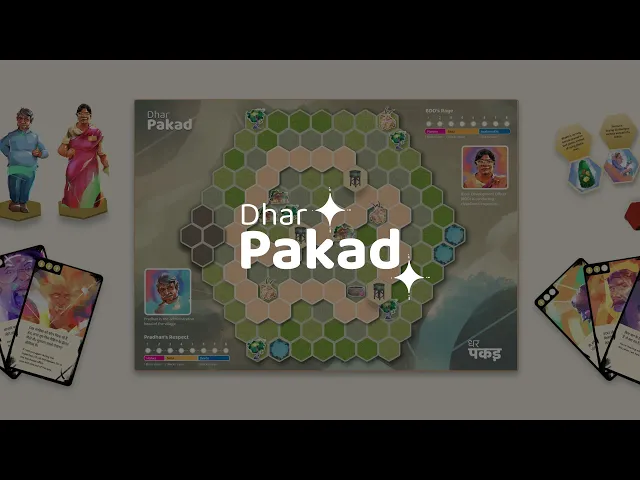
With growing global emphasis on sustainability and eco-friendly practices by the UN and Indian government, there is a pressing need to cultivate awareness and responsibility towards cleanliness and environmental stewardship at an individual level. This paper details the development and evaluation of "Dhar-Pakad," a board game designed to address this need by enhancing awareness among Indian students, primarily, in classes 4 to 10 (aged 10-16 years). The game simulates a scenario where a Block Development Officer (BDO) conducts a surprise inspection in a village managed by a Pradhan. By immersing players in these roles, the game aims to deepen their understanding of personal
responsibilities through interactive gameplay. Evaluation results demonstrate that the game effectively engages players, fosters discussions related to cleanliness, indicating towards information retention and it’s potential as a valuable teaching supplementary tool.
With growing global emphasis on sustainability and eco-friendly practices by the UN and Indian government, there is a pressing need to cultivate awareness and responsibility towards cleanliness and environmental stewardship at an individual level. This paper details the development and evaluation of "Dhar-Pakad," a board game designed to address this need by enhancing awareness among Indian students, primarily, in classes 4 to 10 (aged 10-16 years). The game simulates a scenario where a Block Development Officer (BDO) conducts a surprise inspection in a village managed by a Pradhan. By immersing players in these roles, the game aims to deepen their understanding of personal
responsibilities through interactive gameplay. Evaluation results demonstrate that the game effectively engages players, fosters discussions related to cleanliness, indicating towards information retention and it’s potential as a valuable teaching supplementary tool.
With growing global emphasis on sustainability and eco-friendly practices by the UN and Indian government, there is a pressing need to cultivate awareness and responsibility towards cleanliness and environmental stewardship at an individual level. This paper details the development and evaluation of "Dhar-Pakad," a board game designed to address this need by enhancing awareness among Indian students, primarily, in classes 4 to 10 (aged 10-16 years). The game simulates a scenario where a Block Development Officer (BDO) conducts a surprise inspection in a village managed by a Pradhan. By immersing players in these roles, the game aims to deepen their understanding of personal
responsibilities through interactive gameplay. Evaluation results demonstrate that the game effectively engages players, fosters discussions related to cleanliness, indicating towards information retention and it’s potential as a valuable teaching supplementary tool.
Concept Video
Concept Video
Concept Video
Research
Research
Research
Individual Civic Cleanliness & Sustainable Responsibilities
Individual Civic Cleanliness & Sustainable Responsibilities
Individual Civic Cleanliness & Sustainable Responsibilities
Global initiatives emphasize the need for individual participation in sustainability. United Nations’ Sustainable Development Goals (SDGs) such as ‘Ensure access to water and sanitation for all’ (Goal 6) [1] and ‘Ensure sustainable consumption and production patterns’ (Goal 12) [2] address critical environmental issues including waste management, littering, and water conservation. In India, the Swachh Bharat Mission, launched in 2014, initially aimed to eliminate open defecation but has since broadened its scope to include solid and liquid waste management, as well as cleanliness in public spaces [3]. To foster individual involvement, the government employs Information, Education, and Communication (IEC) [4] strategies through various media and activities. However, sustaining cleanliness and promoting environmental sensitivity ultimately depends on individual responsibility and active participation.
Global initiatives emphasize the need for individual participation in sustainability. United Nations’ Sustainable Development Goals (SDGs) such as ‘Ensure access to water and sanitation for all’ (Goal 6) [1] and ‘Ensure sustainable consumption and production patterns’ (Goal 12) [2] address critical environmental issues including waste management, littering, and water conservation. In India, the Swachh Bharat Mission, launched in 2014, initially aimed to eliminate open defecation but has since broadened its scope to include solid and liquid waste management, as well as cleanliness in public spaces [3]. To foster individual involvement, the government employs Information, Education, and Communication (IEC) [4] strategies through various media and activities. However, sustaining cleanliness and promoting environmental sensitivity ultimately depends on individual responsibility and active participation.
Global initiatives emphasize the need for individual participation in sustainability. United Nations’ Sustainable Development Goals (SDGs) such as ‘Ensure access to water and sanitation for all’ (Goal 6) [1] and ‘Ensure sustainable consumption and production patterns’ (Goal 12) [2] address critical environmental issues including waste management, littering, and water conservation. In India, the Swachh Bharat Mission, launched in 2014, initially aimed to eliminate open defecation but has since broadened its scope to include solid and liquid waste management, as well as cleanliness in public spaces [3]. To foster individual involvement, the government employs Information, Education, and Communication (IEC) [4] strategies through various media and activities. However, sustaining cleanliness and promoting environmental sensitivity ultimately depends on individual responsibility and active participation.
Efficacy of Games in Educating About Cleanliness & Sustainability
Efficacy of Games in Educating About Cleanliness & Sustainability
Efficacy of Games in Educating About Cleanliness & Sustainability
Games have proven to be a powerful educational tool, as their engaging nature can make learning about cleanliness and sustainability both enjoyable and effective. By integrating sustainability themes into game design, players can immerse themselves in real-world scenarios through role-playing, decision-making, and collaboration. This hands-on approach enhances understanding and retention of environmental concepts more effectively than traditional methods [5].
Several board games, such as Paved Paradise [5] and Blutube [6], address issues of sustainability and water conservation, respectively. However, for the Indian demographic, a game tailored to local contexts can further enhance eagerness to engage with the learning environment [7].
Games have proven to be a powerful educational tool, as their engaging nature can make learning about cleanliness and sustainability both enjoyable and effective. By integrating sustainability themes into game design, players can immerse themselves in real-world scenarios through role-playing, decision-making, and collaboration. This hands-on approach enhances understanding and retention of environmental concepts more effectively than traditional methods [5].
Several board games, such as Paved Paradise [5] and Blutube [6], address issues of sustainability and water conservation, respectively. However, for the Indian demographic, a game tailored to local contexts can further enhance eagerness to engage with the learning environment [7].
Games have proven to be a powerful educational tool, as their engaging nature can make learning about cleanliness and sustainability both enjoyable and effective. By integrating sustainability themes into game design, players can immerse themselves in real-world scenarios through role-playing, decision-making, and collaboration. This hands-on approach enhances understanding and retention of environmental concepts more effectively than traditional methods [5].
Several board games, such as Paved Paradise [5] and Blutube [6], address issues of sustainability and water conservation, respectively. However, for the Indian demographic, a game tailored to local contexts can further enhance eagerness to engage with the learning environment [7].
Objective
Objective
Objective
Our goal was to create a game that enhances awareness of social hygiene and environmental responsibility among Indian students in classes 4 to 10, as they are already familiar with these concepts through their curriculum [8]. The game can further deepen understanding and improve information retention by promoting responsible behavior through interactive scenarios; however, this aspect is currently out of the project’s scope.
Our goal was to create a game that enhances awareness of social hygiene and environmental responsibility among Indian students in classes 4 to 10, as they are already familiar with these concepts through their curriculum [8]. The game can further deepen understanding and improve information retention by promoting responsible behavior through interactive scenarios; however, this aspect is currently out of the project’s scope.
Our goal was to create a game that enhances awareness of social hygiene and environmental responsibility among Indian students in classes 4 to 10, as they are already familiar with these concepts through their curriculum [8]. The game can further deepen understanding and improve information retention by promoting responsible behavior through interactive scenarios; however, this aspect is currently out of the project’s scope.
Ideation
Ideation
Ideation
Our ideation process drew from diverse sources. We analyzed board games like Paved Paradise and Blutube, as well as digital games such as Civic Sense [9], which focuses on garbage segregation. We were also inspired by Hide the Corpse [10], a VR game that emphasizes urgency and strategy.
Local observations of littering, open defecation, urinating, and spitting in public places pushed us to create a solution that promotes cleanliness and civic responsibility. Additionally, an episode from the Hindi OTT series Panchayat, by TVF Productions [11], featured a surprise sanitation inspection in a village, which guided our development of a game simulating the Indian bureaucracy system.
Our ideation process drew from diverse sources. We analyzed board games like Paved Paradise and Blutube, as well as digital games such as Civic Sense [9], which focuses on garbage segregation. We were also inspired by Hide the Corpse [10], a VR game that emphasizes urgency and strategy.
Local observations of littering, open defecation, urinating, and spitting in public places pushed us to create a solution that promotes cleanliness and civic responsibility. Additionally, an episode from the Hindi OTT series Panchayat, by TVF Productions [11], featured a surprise sanitation inspection in a village, which guided our development of a game simulating the Indian bureaucracy system.
Our ideation process drew from diverse sources. We analyzed board games like Paved Paradise and Blutube, as well as digital games such as Civic Sense [9], which focuses on garbage segregation. We were also inspired by Hide the Corpse [10], a VR game that emphasizes urgency and strategy.
Local observations of littering, open defecation, urinating, and spitting in public places pushed us to create a solution that promotes cleanliness and civic responsibility. Additionally, an episode from the Hindi OTT series Panchayat, by TVF Productions [11], featured a surprise sanitation inspection in a village, which guided our development of a game simulating the Indian bureaucracy system.
Game Design
Game Design
Game Design
Game Narrative and Roles
Game Narrative and Roles
Game Narrative and Roles
Our game is set in an Indian village and is designed for two players: a Block Development Officer (BDO) and a Pradhan. The BDO oversees development programs and monitors regional progress, though they do not reside in the village. The Pradhan, the elected head of the Gram Panchayat, manages local governance and addresses community needs.
The scenario involves a surprise inspection by the BDO to assess the village’s cleanliness and sustainability under the Swachh Bharat Mission. The BDO warns the Pradhan that identified issues could result in the Pradhan’s expulsion; if no issues are found, the village could win the Swachha Gram (Clean Village) award. The Pradhan must remain in the Panchayat office during the evaluation to avoid interference.
As the BDO inspects the village, the Pradhan moves secretly to alert residents and protect the village’s reputation, creating a strategic contest between the two players. This dynamic inspired the game’s name, Dhar-Pakad, meaning “to run after and catch.”
Our game is set in an Indian village and is designed for two players: a Block Development Officer (BDO) and a Pradhan. The BDO oversees development programs and monitors regional progress, though they do not reside in the village. The Pradhan, the elected head of the Gram Panchayat, manages local governance and addresses community needs.
The scenario involves a surprise inspection by the BDO to assess the village’s cleanliness and sustainability under the Swachh Bharat Mission. The BDO warns the Pradhan that identified issues could result in the Pradhan’s expulsion; if no issues are found, the village could win the Swachha Gram (Clean Village) award. The Pradhan must remain in the Panchayat office during the evaluation to avoid interference.
As the BDO inspects the village, the Pradhan moves secretly to alert residents and protect the village’s reputation, creating a strategic contest between the two players. This dynamic inspired the game’s name, Dhar-Pakad, meaning “to run after and catch.”
Our game is set in an Indian village and is designed for two players: a Block Development Officer (BDO) and a Pradhan. The BDO oversees development programs and monitors regional progress, though they do not reside in the village. The Pradhan, the elected head of the Gram Panchayat, manages local governance and addresses community needs.
The scenario involves a surprise inspection by the BDO to assess the village’s cleanliness and sustainability under the Swachh Bharat Mission. The BDO warns the Pradhan that identified issues could result in the Pradhan’s expulsion; if no issues are found, the village could win the Swachha Gram (Clean Village) award. The Pradhan must remain in the Panchayat office during the evaluation to avoid interference.
As the BDO inspects the village, the Pradhan moves secretly to alert residents and protect the village’s reputation, creating a strategic contest between the two players. This dynamic inspired the game’s name, Dhar-Pakad, meaning “to run after and catch.”
Game Mechanics
Game Mechanics
Game Mechanics
Overview
Overview
Overview
The game is set on a village map made up of hexagonal tiles, each representing different positions. Players choose between the BDO and Pradhan character tokens. They begin by drawing five hexagonal (hex) chips from a shuffled pile of twenty. These hex chips contain a mix of good and bad activities, power-ups, and debuffs, with their contents hidden from the players.
The game is set on a village map made up of hexagonal tiles, each representing different positions. Players choose between the BDO and Pradhan character tokens. They begin by drawing five hexagonal (hex) chips from a shuffled pile of twenty. These hex chips contain a mix of good and bad activities, power-ups, and debuffs, with their contents hidden from the players.
The game is set on a village map made up of hexagonal tiles, each representing different positions. Players choose between the BDO and Pradhan character tokens. They begin by drawing five hexagonal (hex) chips from a shuffled pile of twenty. These hex chips contain a mix of good and bad activities, power-ups, and debuffs, with their contents hidden from the players.

Gameplay
Gameplay
Gameplay
Players take turns placing their hex chips strategically anywhere on the map, except on the main road and obstructions such as ponds or houses. Once all the chips are placed, the player role-playing the BDO rolls a die to determine their movement, followed by the Pradhan. Both players aim to identify and address as many bad activity chips as possible.
Players take turns placing their hex chips strategically anywhere on the map, except on the main road and obstructions such as ponds or houses. Once all the chips are placed, the player role-playing the BDO rolls a die to determine their movement, followed by the Pradhan. Both players aim to identify and address as many bad activity chips as possible.
Players take turns placing their hex chips strategically anywhere on the map, except on the main road and obstructions such as ponds or houses. Once all the chips are placed, the player role-playing the BDO rolls a die to determine their movement, followed by the Pradhan. Both players aim to identify and address as many bad activity chips as possible.

When an activity chip is revealed, the illustration and description provide clues to determine whether the activity is sustainable or not. Players can consult the Guidelines to Win Swachha Gram Award chart if necessary.
When an activity chip is revealed, the illustration and description provide clues to determine whether the activity is sustainable or not. Players can consult the Guidelines to Win Swachha Gram Award chart if necessary.
When an activity chip is revealed, the illustration and description provide clues to determine whether the activity is sustainable or not. Players can consult the Guidelines to Win Swachha Gram Award chart if necessary.

Characters and Movement
Characters and Movement
Characters and Movement

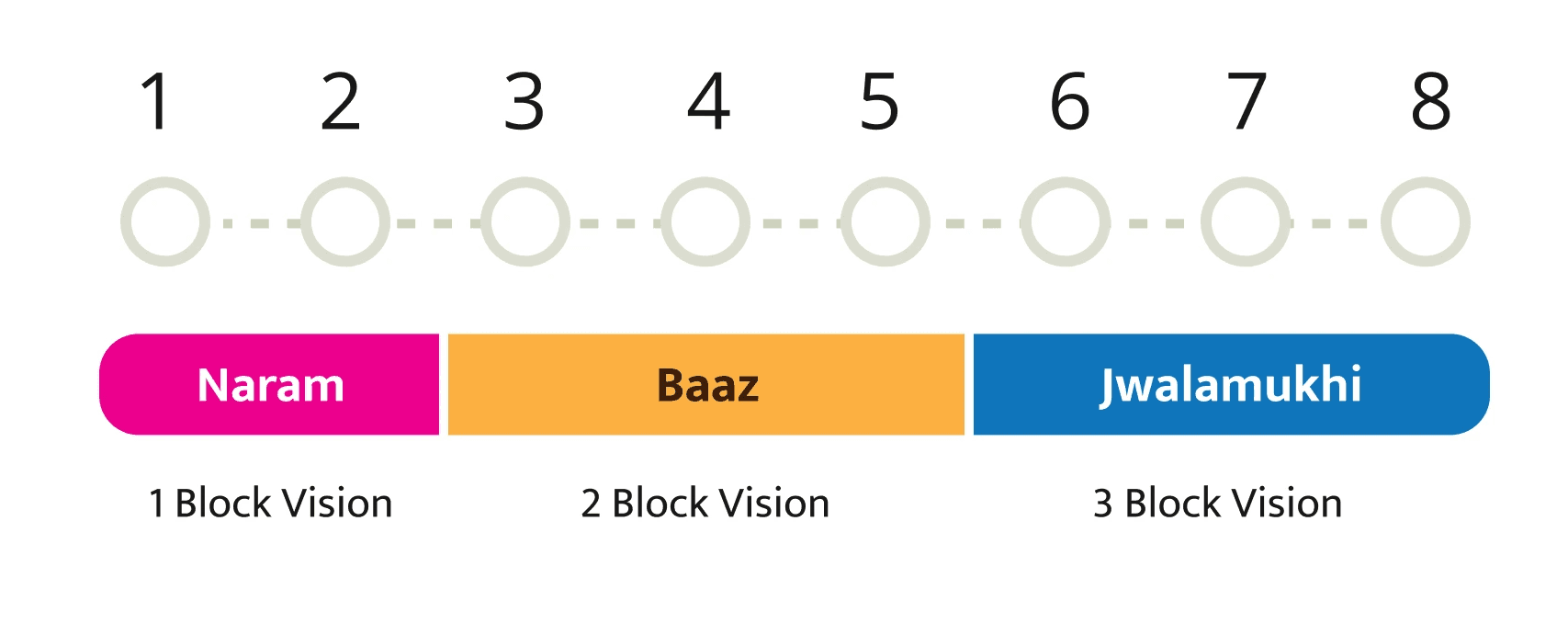
BDO: Since the BDO is new to the village, they can only move along the main road, with their path determined by a die roll. Their vision expands with their rage level. The BDO can climb water tanks for an aerial view, revealing a hex chip within their line of sight. From this vantage point, the Pradhan can be summoned to the BDO’s location for a meeting, unless the Pradhan is in the Panchayat office area, which serves as the designated safe zone.
BDO: Since the BDO is new to the village, they can only move along the main road, with their path determined by a die roll. Their vision expands with their rage level. The BDO can climb water tanks for an aerial view, revealing a hex chip within their line of sight. From this vantage point, the Pradhan can be summoned to the BDO’s location for a meeting, unless the Pradhan is in the Panchayat office area, which serves as the designated safe zone.
BDO: Since the BDO is new to the village, they can only move along the main road, with their path determined by a die roll. Their vision expands with their rage level. The BDO can climb water tanks for an aerial view, revealing a hex chip within their line of sight. From this vantage point, the Pradhan can be summoned to the BDO’s location for a meeting, unless the Pradhan is in the Panchayat office area, which serves as the designated safe zone.
Pradhan: The Pradhan can move on all tiles except obstacles, in a straight line based on a die roll, but may turn if they encounter an obstacle or a boundary. When they address bad activities, their respect level increases; however, harassing ideal citizens results in the loss of one respect point. Their vision expands with their respect level
Pradhan: The Pradhan can move on all tiles except obstacles, in a straight line based on a die roll, but may turn if they encounter an obstacle or a boundary. When they address bad activities, their respect level increases; however, harassing ideal citizens results in the loss of one respect point. Their vision expands with their respect level
Pradhan: The Pradhan can move on all tiles except obstacles, in a straight line based on a die roll, but may turn if they encounter an obstacle or a boundary. When they address bad activities, their respect level increases; however, harassing ideal citizens results in the loss of one respect point. Their vision expands with their respect level


Components
Components
Components
Conversation Cards: Each player has nine conversation cards that are used during interactions when the BDO spots the Pradhan outside the Panchayat office. Each card has a power rating from 1 to 3.
When caught, the Pradhan must move to the BDO’s position. The BDO then draws a card from their set, which contains accusations of varying severity, and reads it aloud. The Pradhan responds by drawing a card from their own set, which includes flattering or arrogant responses.
Conversation Cards: Each player has nine conversation cards that are used during interactions when the BDO spots the Pradhan outside the Panchayat office. Each card has a power rating from 1 to 3.
When caught, the Pradhan must move to the BDO’s position. The BDO then draws a card from their set, which contains accusations of varying severity, and reads it aloud. The Pradhan responds by drawing a card from their own set, which includes flattering or arrogant responses.
Conversation Cards: Each player has nine conversation cards that are used during interactions when the BDO spots the Pradhan outside the Panchayat office. Each card has a power rating from 1 to 3.
When caught, the Pradhan must move to the BDO’s position. The BDO then draws a card from their set, which contains accusations of varying severity, and reads it aloud. The Pradhan responds by drawing a card from their own set, which includes flattering or arrogant responses.

The outcome is determined by comparing the power of the cards played: the player with the higher power card wins. The difference between the power values is added to or deducted from the respective scales of the winner and loser for that conversation round. If the Pradhan loses, their token must return to the Panchayat office.
The outcome is determined by comparing the power of the cards played: the player with the higher power card wins. The difference between the power values is added to or deducted from the respective scales of the winner and loser for that conversation round. If the Pradhan loses, their token must return to the Panchayat office.
The outcome is determined by comparing the power of the cards played: the player with the higher power card wins. The difference between the power values is added to or deducted from the respective scales of the winner and loser for that conversation round. If the Pradhan loses, their token must return to the Panchayat office.

Panic Token: The Panic token, usable once per game, allows a player to challenge their opponent for a conversation card, giving them an opportunity to double their reward points. The losing player has their points deducted by the usual amount.
Panic Token: The Panic token, usable once per game, allows a player to challenge their opponent for a conversation card, giving them an opportunity to double their reward points. The losing player has their points deducted by the usual amount.
Panic Token: The Panic token, usable once per game, allows a player to challenge their opponent for a conversation card, giving them an opportunity to double their reward points. The losing player has their points deducted by the usual amount.
Winning Criteria
Winning Criteria
Winning Criteria
The game ends when all hexagonal chips on the board have been revealed. The player with the highest accumulated rage or respect points wins. In the event of a tie, the player who has caught the most bad activity chips is declared the winner. If a tie persists, players continue a battle of accusations using their remaining conversation cards until a winner is determined.
The game ends when all hexagonal chips on the board have been revealed. The player with the highest accumulated rage or respect points wins. In the event of a tie, the player who has caught the most bad activity chips is declared the winner. If a tie persists, players continue a battle of accusations using their remaining conversation cards until a winner is determined.
The game ends when all hexagonal chips on the board have been revealed. The player with the highest accumulated rage or respect points wins. In the event of a tie, the player who has caught the most bad activity chips is declared the winner. If a tie persists, players continue a battle of accusations using their remaining conversation cards until a winner is determined.
Designing for Relatability
Designing for Relatability
Designing for Relatability
While introducing the Pradhan and BDO characters, we focused on explaining their roles clearly and simply. Players from village backgrounds, or those who have watched the popular web series Panchayat, may already be familiar with these roles. For those who aren’t, we added brief descriptions of their responsibilities on the game board to encourage curiosity about village administration.
To humanize these characters, we introduced emotion scales of Respect for the Pradhan and Rage for the BDO, based on the cleanliness inspection event. This allows players to connect emotionally with the characters’ actions. Adding a comical twist, we used playful, colloquial terms like “halwa,” “neta,” and “jwalamukhi,” and incorporated culturally significant items such as the lota (water pot), paan (betel leaf), and charpai (cot). Events like distributing prasad and purchasing sachets from local shops further enhance this sense of familiarity.
These elements ground the game in an accessible cultural context, helping players relate to the importance of practicing environmentally friendly and sustainable habits in their own surroundings.
While introducing the Pradhan and BDO characters, we focused on explaining their roles clearly and simply. Players from village backgrounds, or those who have watched the popular web series Panchayat, may already be familiar with these roles. For those who aren’t, we added brief descriptions of their responsibilities on the game board to encourage curiosity about village administration.
To humanize these characters, we introduced emotion scales of Respect for the Pradhan and Rage for the BDO, based on the cleanliness inspection event. This allows players to connect emotionally with the characters’ actions. Adding a comical twist, we used playful, colloquial terms like “halwa,” “neta,” and “jwalamukhi,” and incorporated culturally significant items such as the lota (water pot), paan (betel leaf), and charpai (cot). Events like distributing prasad and purchasing sachets from local shops further enhance this sense of familiarity.
These elements ground the game in an accessible cultural context, helping players relate to the importance of practicing environmentally friendly and sustainable habits in their own surroundings.
While introducing the Pradhan and BDO characters, we focused on explaining their roles clearly and simply. Players from village backgrounds, or those who have watched the popular web series Panchayat, may already be familiar with these roles. For those who aren’t, we added brief descriptions of their responsibilities on the game board to encourage curiosity about village administration.
To humanize these characters, we introduced emotion scales of Respect for the Pradhan and Rage for the BDO, based on the cleanliness inspection event. This allows players to connect emotionally with the characters’ actions. Adding a comical twist, we used playful, colloquial terms like “halwa,” “neta,” and “jwalamukhi,” and incorporated culturally significant items such as the lota (water pot), paan (betel leaf), and charpai (cot). Events like distributing prasad and purchasing sachets from local shops further enhance this sense of familiarity.
These elements ground the game in an accessible cultural context, helping players relate to the importance of practicing environmentally friendly and sustainable habits in their own surroundings.
Visual Design
Visual Design
Visual Design
The visual design of Dhar-Pakad integrates a whimsical and vibrant aesthetic to enhance player engagement. The characters are depicted with exaggerated, comical facial features and bold, dynamic strokes, drawing inspiration from games like Disco Elysium [12], where character dynamics and statuses are highlighted through distinct visual annotations.
The village is populated with eccentric characters, ranging from the pious Bhakti to the mischievous Brijesh. To accentuate this range of emotions, we used dual lighting in the in-game illustrations and board design. This approach aims to make the characters appear larger than life, fostering a strong connection between players and their in-game personas.
The visual design of Dhar-Pakad integrates a whimsical and vibrant aesthetic to enhance player engagement. The characters are depicted with exaggerated, comical facial features and bold, dynamic strokes, drawing inspiration from games like Disco Elysium [12], where character dynamics and statuses are highlighted through distinct visual annotations.
The village is populated with eccentric characters, ranging from the pious Bhakti to the mischievous Brijesh. To accentuate this range of emotions, we used dual lighting in the in-game illustrations and board design. This approach aims to make the characters appear larger than life, fostering a strong connection between players and their in-game personas.
The visual design of Dhar-Pakad integrates a whimsical and vibrant aesthetic to enhance player engagement. The characters are depicted with exaggerated, comical facial features and bold, dynamic strokes, drawing inspiration from games like Disco Elysium [12], where character dynamics and statuses are highlighted through distinct visual annotations.
The village is populated with eccentric characters, ranging from the pious Bhakti to the mischievous Brijesh. To accentuate this range of emotions, we used dual lighting in the in-game illustrations and board design. This approach aims to make the characters appear larger than life, fostering a strong connection between players and their in-game personas.
Evaluation
Evaluation
Evaluation

Seven rounds of evaluation were conducted with young adults, including engineers, interaction designers, and board game enthusiasts aged 21–29, followed by six rounds with students from grades 3 to 10, aged 9–16.
Early gameplay revealed a bias toward players who quickly accumulated points, while conversation cards—which could have helped balance the game—were largely unused. To address this, we introduced new ways to activate conversation cards, such as through water tanks and Panic tokens. We also increased the game’s complexity by adding power-ups and debuffs to the hex chips, extending gameplay beyond the initial 10–15 minutes.
The original color coding of the hex chips (red for bad, green for good) was removed, as players quickly recognized the chips without seeing the activity itself, defeating the purpose of raising awareness. A guidelines chart listing both good and bad activities was introduced to offer quick reference during gameplay. We also increased and diversified the hex chip activities to ensure novelty and variation in every game round.
Feedback indicated that players enjoyed role-playing and reading conversation cards, as they featured idioms and familiar phrases. However, we observed that players were disappointed when they encountered good activities, revealing an issue with the mental model formed during gameplay. To assess changes in awareness, we asked students questions before and after the game.
We observed that many participants learned about new sustainability practices through gameplay and discussion, such as using leaf plates, composting, and minimizing the consumption of non-biodegradable materials. Participants who were already familiar with these topics often explained the reasoning behind them to others. Players also expressed intentions to implement these learnings in their own surroundings. One player proudly stated, “Humare ghar me ye follow karte hai” (We follow this in our household) when referring to waste segregation. Another shared that they regularly donate old clothes and toys, further emphasizing the game’s educational value.
Parents reported that after returning home, their children talked about what they had learned from the game, indicating a positive impact on information retention.
Seven rounds of evaluation were conducted with young adults, including engineers, interaction designers, and board game enthusiasts aged 21–29, followed by six rounds with students from grades 3 to 10, aged 9–16.
Early gameplay revealed a bias toward players who quickly accumulated points, while conversation cards—which could have helped balance the game—were largely unused. To address this, we introduced new ways to activate conversation cards, such as through water tanks and Panic tokens. We also increased the game’s complexity by adding power-ups and debuffs to the hex chips, extending gameplay beyond the initial 10–15 minutes.
The original color coding of the hex chips (red for bad, green for good) was removed, as players quickly recognized the chips without seeing the activity itself, defeating the purpose of raising awareness. A guidelines chart listing both good and bad activities was introduced to offer quick reference during gameplay. We also increased and diversified the hex chip activities to ensure novelty and variation in every game round.
Feedback indicated that players enjoyed role-playing and reading conversation cards, as they featured idioms and familiar phrases. However, we observed that players were disappointed when they encountered good activities, revealing an issue with the mental model formed during gameplay. To assess changes in awareness, we asked students questions before and after the game.
We observed that many participants learned about new sustainability practices through gameplay and discussion, such as using leaf plates, composting, and minimizing the consumption of non-biodegradable materials. Participants who were already familiar with these topics often explained the reasoning behind them to others. Players also expressed intentions to implement these learnings in their own surroundings. One player proudly stated, “Humare ghar me ye follow karte hai” (We follow this in our household) when referring to waste segregation. Another shared that they regularly donate old clothes and toys, further emphasizing the game’s educational value.
Parents reported that after returning home, their children talked about what they had learned from the game, indicating a positive impact on information retention.
Seven rounds of evaluation were conducted with young adults, including engineers, interaction designers, and board game enthusiasts aged 21–29, followed by six rounds with students from grades 3 to 10, aged 9–16.
Early gameplay revealed a bias toward players who quickly accumulated points, while conversation cards—which could have helped balance the game—were largely unused. To address this, we introduced new ways to activate conversation cards, such as through water tanks and Panic tokens. We also increased the game’s complexity by adding power-ups and debuffs to the hex chips, extending gameplay beyond the initial 10–15 minutes.
The original color coding of the hex chips (red for bad, green for good) was removed, as players quickly recognized the chips without seeing the activity itself, defeating the purpose of raising awareness. A guidelines chart listing both good and bad activities was introduced to offer quick reference during gameplay. We also increased and diversified the hex chip activities to ensure novelty and variation in every game round.
Feedback indicated that players enjoyed role-playing and reading conversation cards, as they featured idioms and familiar phrases. However, we observed that players were disappointed when they encountered good activities, revealing an issue with the mental model formed during gameplay. To assess changes in awareness, we asked students questions before and after the game.
We observed that many participants learned about new sustainability practices through gameplay and discussion, such as using leaf plates, composting, and minimizing the consumption of non-biodegradable materials. Participants who were already familiar with these topics often explained the reasoning behind them to others. Players also expressed intentions to implement these learnings in their own surroundings. One player proudly stated, “Humare ghar me ye follow karte hai” (We follow this in our household) when referring to waste segregation. Another shared that they regularly donate old clothes and toys, further emphasizing the game’s educational value.
Parents reported that after returning home, their children talked about what they had learned from the game, indicating a positive impact on information retention.
Conclusion and Future Work
Conclusion and Future Work
Conclusion and Future Work
To promote individual cleanliness and sustainability, we developed the board game Dhar-Pakad for students aged 10 to 16. Evaluations show that the game effectively raises awareness, sparks discussion, and promotes decision-making around sustainable practices. In future work, we plan to expand evaluations to rural and underprivileged urban communities and translate the game into regional languages to assess its broader educational impact. We also aim to refine players’ mental models around activity recognition and introduce multiple game levels based on age.
Upcoming iterations will feature foldable maps with diverse settings—such as villages, cities, and schools—and incorporate additional administrative roles to deepen the educational experience. New mechanics will be introduced in which early game decisions affect later outcomes, reinforcing the importance of long-term sustainable thinking. We also plan to conduct a long-term study to track retention and the implementation of good practices, including interviews with parents to evaluate the game’s influence on children’s behavior.
To promote individual cleanliness and sustainability, we developed the board game Dhar-Pakad for students aged 10 to 16. Evaluations show that the game effectively raises awareness, sparks discussion, and promotes decision-making around sustainable practices. In future work, we plan to expand evaluations to rural and underprivileged urban communities and translate the game into regional languages to assess its broader educational impact. We also aim to refine players’ mental models around activity recognition and introduce multiple game levels based on age.
Upcoming iterations will feature foldable maps with diverse settings—such as villages, cities, and schools—and incorporate additional administrative roles to deepen the educational experience. New mechanics will be introduced in which early game decisions affect later outcomes, reinforcing the importance of long-term sustainable thinking. We also plan to conduct a long-term study to track retention and the implementation of good practices, including interviews with parents to evaluate the game’s influence on children’s behavior.
To promote individual cleanliness and sustainability, we developed the board game Dhar-Pakad for students aged 10 to 16. Evaluations show that the game effectively raises awareness, sparks discussion, and promotes decision-making around sustainable practices. In future work, we plan to expand evaluations to rural and underprivileged urban communities and translate the game into regional languages to assess its broader educational impact. We also aim to refine players’ mental models around activity recognition and introduce multiple game levels based on age.
Upcoming iterations will feature foldable maps with diverse settings—such as villages, cities, and schools—and incorporate additional administrative roles to deepen the educational experience. New mechanics will be introduced in which early game decisions affect later outcomes, reinforcing the importance of long-term sustainable thinking. We also plan to conduct a long-term study to track retention and the implementation of good practices, including interviews with parents to evaluate the game’s influence on children’s behavior.
References
References
References
United Nations, Department of Economic and Social Affairs. Sustainable Development: Ensure Availability and Sustainable Management of Water and Sanitation for All. https://sdgs.un.org/goals/goal6, last accessed 2024/08/04.
United Nations, Department of Economic and Social Affairs. Sustainable Development: Ensure Sustainable Consumption and Production Patterns. https://sdgs.un.org/goals/goal12, last accessed 2024/08/04.
Swachh Bharat Mission (Gramin) Homepage. https://swachhbharatmission.ddws.gov.in, last accessed 2024/08/04.
Rajsekhar, D., Manjula, R. Swachh Bharat Mission: Awareness Strategies, Implementation and Issues. The Institute for Social and Economic Change (2023).
Pope, L. Board Games as a Teaching Tool for Sustainability. Prescott College (2023).
DiPaolo, R., Pizziol, V. Gamification and sustainable water use: The case of the BLUTUBE educational program. Simulation & Gaming, 55(3), 391–417. https://doi.org/10.1177/10468781231181652.
Lehtonen, T., et al. On the role of gamification and localization in an open online learning environment. In Proceedings of the 15th Koli Calling Conference on Computing Education Research (2015).
NCERT. Final Syllabus on Health and Physical Education (Classes I–X). https://ncert.nic.in/pdf/syllabus/, last accessed 2024/08/04.
Karelia, G. This Bengaluru start-up creates a game to make waste segregation fun. https://swachhindia.ndtv.com/bengaluru-start-creates-game-make-waste-segregation-fun-14062/, last accessed 2024/08/04.
Realcast. Hide the Corpse. https://realcast.io/htc/, last accessed 2024/08/04.
Amazon Prime Video; TVF (The Viral Fever). Panchayat. Season 2, Episode 3. https://www.primevideo.com/detail/Panchayat, last accessed 2024/08/04.
ZA/UM. Disco Elysium: The Final Cut. https://discoelysium.com/, last accessed 2024/08/04.
United Nations, Department of Economic and Social Affairs. Sustainable Development: Ensure Availability and Sustainable Management of Water and Sanitation for All. https://sdgs.un.org/goals/goal6, last accessed 2024/08/04.
United Nations, Department of Economic and Social Affairs. Sustainable Development: Ensure Sustainable Consumption and Production Patterns. https://sdgs.un.org/goals/goal12, last accessed 2024/08/04.
Swachh Bharat Mission (Gramin) Homepage. https://swachhbharatmission.ddws.gov.in, last accessed 2024/08/04.
Rajsekhar, D., Manjula, R. Swachh Bharat Mission: Awareness Strategies, Implementation and Issues. The Institute for Social and Economic Change (2023).
Pope, L. Board Games as a Teaching Tool for Sustainability. Prescott College (2023).
DiPaolo, R., Pizziol, V. Gamification and sustainable water use: The case of the BLUTUBE educational program. Simulation & Gaming, 55(3), 391–417. https://doi.org/10.1177/10468781231181652.
Lehtonen, T., et al. On the role of gamification and localization in an open online learning environment. In Proceedings of the 15th Koli Calling Conference on Computing Education Research (2015).
NCERT. Final Syllabus on Health and Physical Education (Classes I–X). https://ncert.nic.in/pdf/syllabus/, last accessed 2024/08/04.
Karelia, G. This Bengaluru start-up creates a game to make waste segregation fun. https://swachhindia.ndtv.com/bengaluru-start-creates-game-make-waste-segregation-fun-14062/, last accessed 2024/08/04.
Realcast. Hide the Corpse. https://realcast.io/htc/, last accessed 2024/08/04.
Amazon Prime Video; TVF (The Viral Fever). Panchayat. Season 2, Episode 3. https://www.primevideo.com/detail/Panchayat, last accessed 2024/08/04.
ZA/UM. Disco Elysium: The Final Cut. https://discoelysium.com/, last accessed 2024/08/04.
United Nations, Department of Economic and Social Affairs. Sustainable Development: Ensure Availability and Sustainable Management of Water and Sanitation for All. https://sdgs.un.org/goals/goal6, last accessed 2024/08/04.
United Nations, Department of Economic and Social Affairs. Sustainable Development: Ensure Sustainable Consumption and Production Patterns. https://sdgs.un.org/goals/goal12, last accessed 2024/08/04.
Swachh Bharat Mission (Gramin) Homepage. https://swachhbharatmission.ddws.gov.in, last accessed 2024/08/04.
Rajsekhar, D., Manjula, R. Swachh Bharat Mission: Awareness Strategies, Implementation and Issues. The Institute for Social and Economic Change (2023).
Pope, L. Board Games as a Teaching Tool for Sustainability. Prescott College (2023).
DiPaolo, R., Pizziol, V. Gamification and sustainable water use: The case of the BLUTUBE educational program. Simulation & Gaming, 55(3), 391–417. https://doi.org/10.1177/10468781231181652.
Lehtonen, T., et al. On the role of gamification and localization in an open online learning environment. In Proceedings of the 15th Koli Calling Conference on Computing Education Research (2015).
NCERT. Final Syllabus on Health and Physical Education (Classes I–X). https://ncert.nic.in/pdf/syllabus/, last accessed 2024/08/04.
Karelia, G. This Bengaluru start-up creates a game to make waste segregation fun. https://swachhindia.ndtv.com/bengaluru-start-creates-game-make-waste-segregation-fun-14062/, last accessed 2024/08/04.
Realcast. Hide the Corpse. https://realcast.io/htc/, last accessed 2024/08/04.
Amazon Prime Video; TVF (The Viral Fever). Panchayat. Season 2, Episode 3. https://www.primevideo.com/detail/Panchayat, last accessed 2024/08/04.
ZA/UM. Disco Elysium: The Final Cut. https://discoelysium.com/, last accessed 2024/08/04.